

Carbonation is the final step in brewing that shapes head retention, mouthfeel, and aroma presentation. Depending on available equipment and beer style, a brewer can rely on secondary yeast fermentation with priming sugar or dissolve gas directly from a cylinder under pressure.
What Is Beer Carbonation and What Dictates CO2 Levels
Carbonation represents the process of dissolving carbon dioxide into a liquid. It is measured in volumes of CO2. One volume means that at standard atmospheric pressure, the dissolved gas would occupy the exact same volume as the liquid itself. Contemporary beer styles are generally carbonated between 2.0 and 2.5 volumes of CO2, with 2.5 volumes (about 5 g/L) being the benchmark for standard brews.
Target volumes depend heavily on the style:
- British ales are traditionally lightly carbonated at approximately 1.5 volumes.
- German wheat beers exhibit intense effervescence reaching up to 5 volumes of CO2.
Liquid temperature is critical. Cold beer dissolves and holds significantly more carbon dioxide than warm beer. Therefore, calculating priming sugar or setting gas pressure on a regulator always starts with measuring liquid temperature.
Natural Bottle Carbonation: Priming Rules
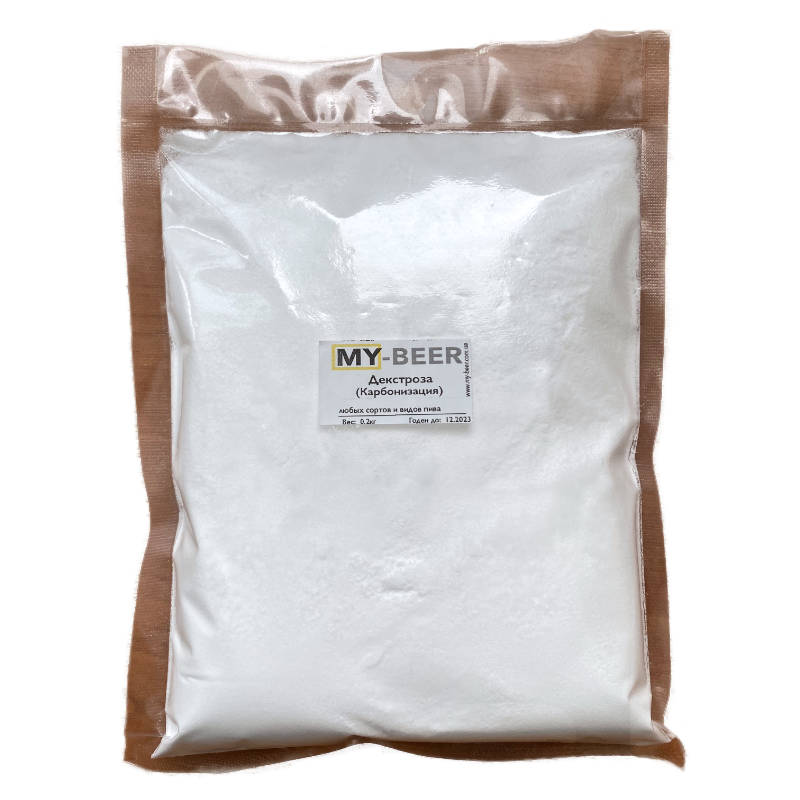
Natural carbonation relies on refermenting a small amount of sugar in sealed bottles to trap residual gas. Brewers commonly use dextrose 0.2 kg (carbonation) or pre-measured carbonation drops, maintaining a dosage of up to 9 g/L of sugar.
Key steps ensure predictable results:
- Sterilization of the priming syrup involves boiling it gently for 15 minutes.
- Blending takes place in a separate bottling vessel to ensure uniform distribution without splashing or introducing oxygen.
- Capping bottles immediately after filling reduces contact with ambient air.
Bottles are then kept at room temperature for around two weeks to complete fermentation before being transferred to cold storage. Refer to our dedicated article on bottle conditioning for in-depth guidance.
Natural Keg Carbonation: Less Primer and Reliable Sealing
Kegging streamlines operations because sanitizing one large stainless container replaces handling dozens of bottles. However, adding fermentable sugar directly to a keg requires a distinct approach.
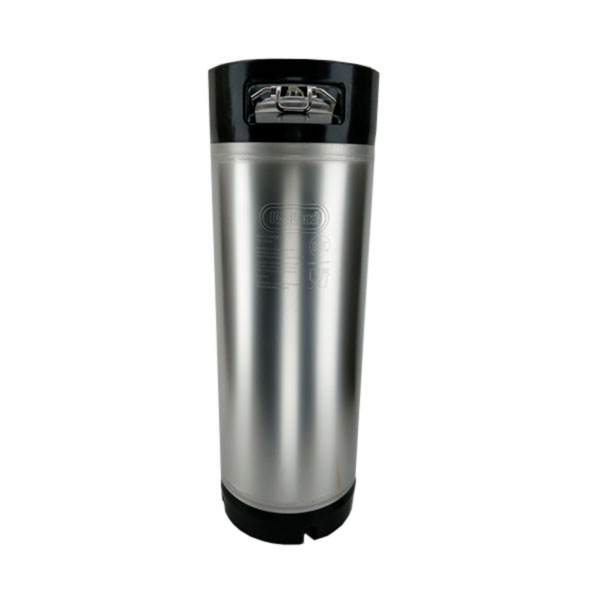
Sugar amounts must be reduced: a keg requires about one-third to one-half less sugar than the same volume in bottles, averaging 4–5 g/L. Cornelius keg lids rely on internal pressure for an airtight seal, so after adding the priming solution and closing the lid, you must apply a brief burst of gas from a CO2 cylinder to seat the gasket securely.
Conditioning takes a few weeks, matching bottle timelines. Worth knowing: natural CO2 degrades over time to ordinary CO2.
Beer Carbonation Table: Balancing Pressure and Temperature
When applying external gas, carbonation relies on temperature and headspace pressure equilibrium. A dedicated reference chart links regulator readings directly to vessel temperature.
Higher liquid temperatures demand higher gauge pressure to keep target gas volumes in solution:
- At 4 °C, reaching 2.4 volumes of CO2 requires 0.76 bar (11 psi).
- At 18 °C, achieving that same 2.4 volumes demands 1.86 bar (27 psi).
If fully carbonated beer at 1.86 bar (27 psi) is chilled from 18 °C down to 4 °C without introducing additional gas, the dissolved CO2 volume stays unchanged, while headspace gauge pressure drops naturally.
Forced Carbonation: Set-and-Forget vs. Express Methods
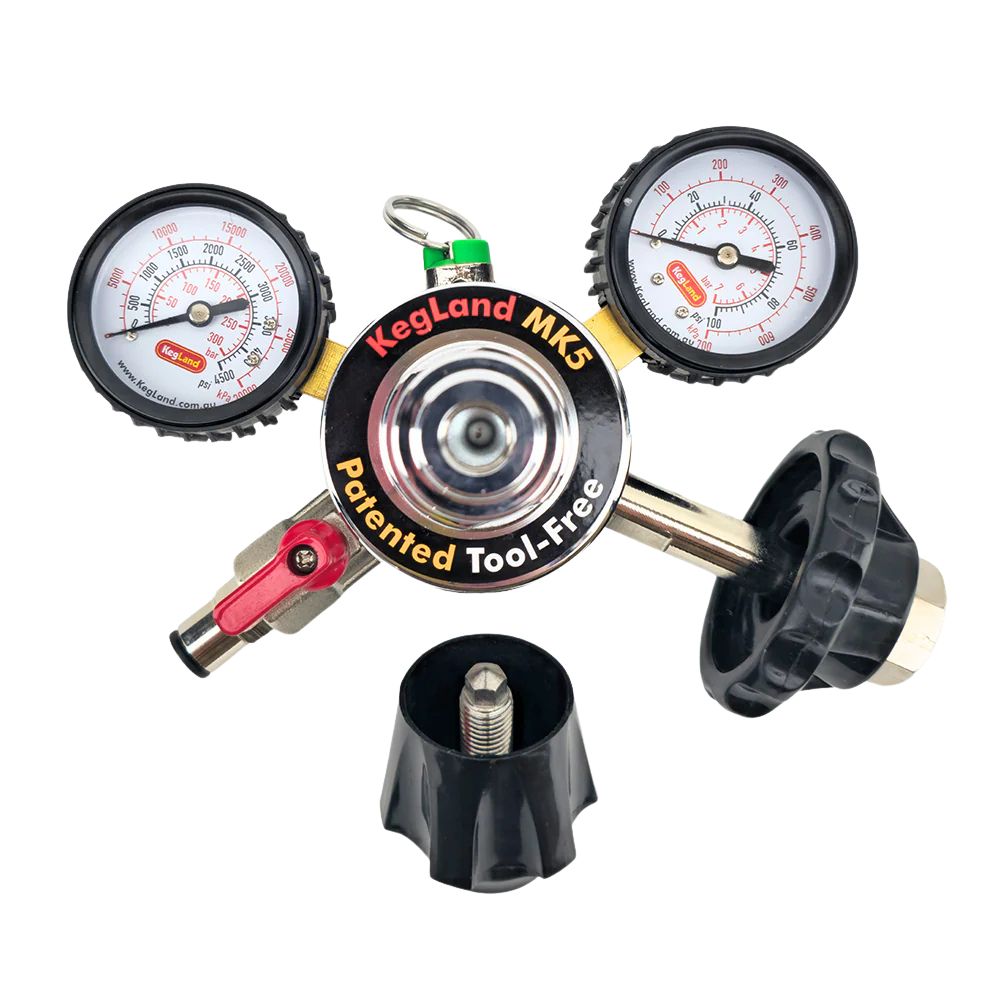
Forced carbonation relies on dissolving CO2 directly from a cylinder into cold beer. Equipment typically includes a 2.3 kg CO2 tank, a dedicated regulator, and pressure-rated vessels such as a mini keg 8L or standard Cornelius kegs. Two primary methods are used:
- Passive method ("set and forget"): Apply serving pressure of 0.76–0.83 bar (11–12 psi) at serving temperature for 1–2 weeks until gas absorption reaches equilibrium.
- Express method: Crank the regulator to 2.07 bar (30 psi) for 24–36 hours (or 1–2 days), vent excess headspace pressure, and reset to 0.83 bar (12 psi) for an additional 1–3 days. Alternatively, use a hybrid technique by setting 0.83 bar (12 psi) and shaking the vessel every two hours on day one, followed by 4–6 days of resting.
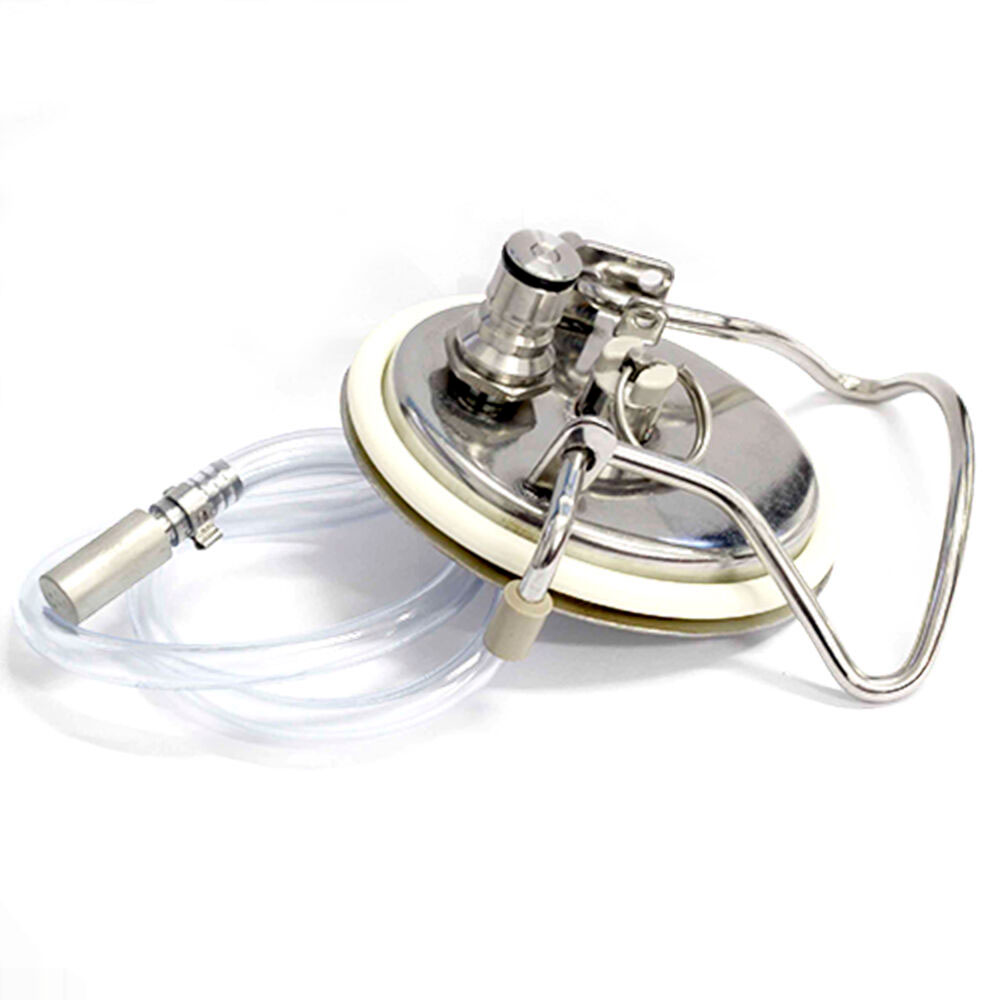
A diffusion stone speeds up forced carbonation. It can be fitted into a keg using, for example, a Cornelius carbonation lid.
Draft Balancing and Pressure Bottling
To avoid excessive foaming at the tap, draft line resistance must match vessel carbonation pressure. Long, narrow tubing offers greater flow resistance and requires higher dispense pressure, while short, wide lines require less. Keeping dispense pressure balanced with carbonation pressure maintains smooth pours.
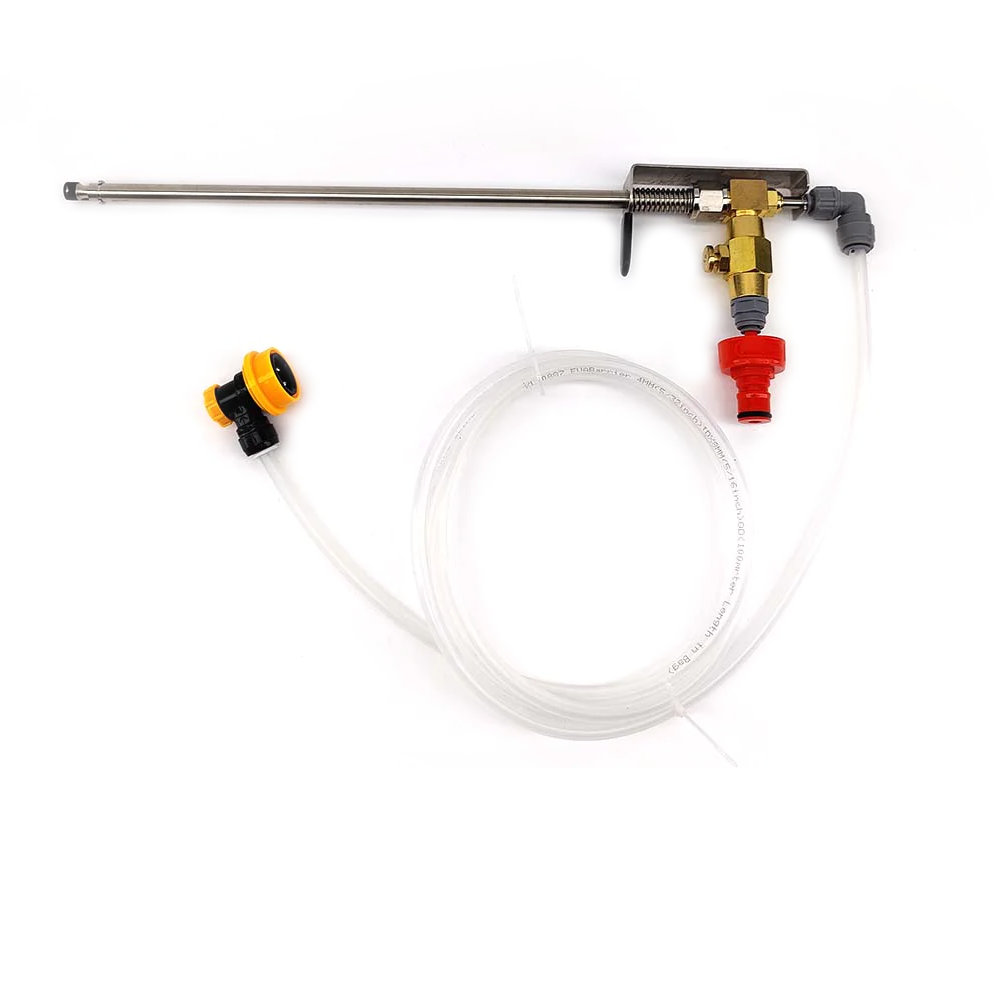
Bottling from a carbonated keg requires counter-pressure equipment: the Duotight filler gun fills bottles cleanly without losing carbonation or clarity. Closed transfers from a fermenter into a keg can be managed using a spunding valve or a FermZilla pressure kit.
Frequently Asked Questions
Why does natural carbonation in a keg require less sugar than in bottles?
That is established practice: around 4–5 g/L of priming sugar for a keg, versus up to 9 g/L for bottles.
Can I drink beer immediately after high-pressure express carbonation at 2 bar (30 psi)?
After the fast method, first bring the pressure down to serving level, then pour.
How do you know when forced carbonation by shaking is complete?
During agitation, gas rushes into the vessel with an audible hissing sound. Once the liquid reaches saturation at the set regulator pressure, the flow of gas stops completely.
What should I do if a keg becomes overcarbonated?
Disconnect the gas, release excess pressure through the lid valve, then check the pour.