

Draft Dispensing Principles: Keg Coupler vs Ball Lock
Draft dispensing relies on head pressure to push beer out of the vessel through a dip tube and into the faucet line. However, the connection method differs between commercial setups and craft brewing. Industrial breweries rely on metal and PET casks fitted with Sankey-style valves, whereas craft operations and homebrewers favor Cornelius (Corny) kegs.
Commercial steel kegs require a tap adapter called a keg coupler. This device mounts directly onto the central neck. It features an outer body, an internal probe that engages the valve, and an operating lever handle. Rubber seals ensure tight closure while gas pressure (CO2 or nitrogen mix) pushes liquid up into the beverage line.
There is no single universal connection standard. Historically, regional breweries developed proprietary fittings for their domestic markets. Equipment should never be chosen based solely on beverage brand names, as breweries often package beverages into different containers for export. Selection must always follow the physical shape of the valve on the specific keg.
Commercial Coupler Standards: Types A, S, D, G, M, U, and K
Commercial draft systems are grouped by flange profile and mechanical locking style:
- Types A and M: German flat slider mechanisms. Keg coupler (claws) type A slides laterally across the round flat flange along guide channels before the lever engages the probe. Type M uses a similar sliding action but is a separate standard.
- Types S and D: the European and American Sankey. The S-system is the European Sankey standard. The D-system represents the classic American Sankey fitting found on most North American kegs. Although they look similar, they are not interchangeable.
- Types G and U: British standards. A G-style neck features a circular perimeter with three flattened edges. Type U is another British standard with its own fitting design.
- Type K (KeyKeg): a connection engineered for single-use recyclable PET containers fitted with an internal bag.
Safety rule: attachment must be smooth. If sliding or twisting the coupler requires significant force, the coupler does not match the valve. Forcing it down will ruin the gaskets or damage the lugs.
Ball Lock Connectors: The Standard for Cornelius Kegs
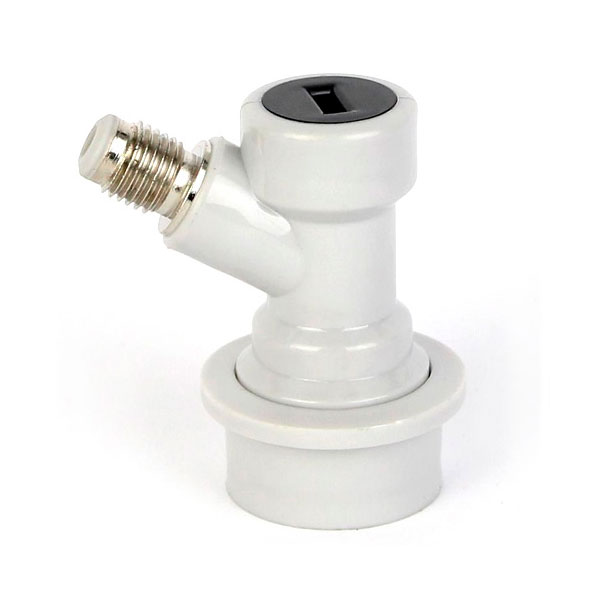
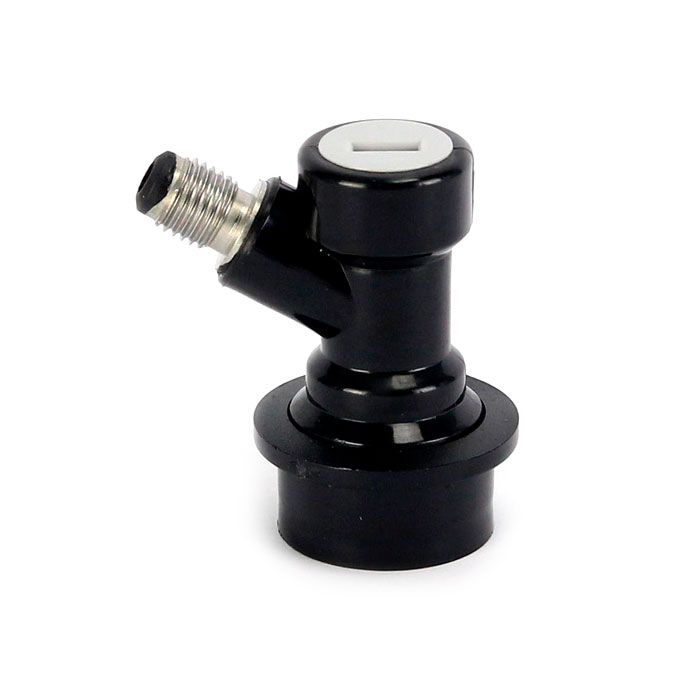
Cornelius kegs, most frequently found in 19-liter capacities (alongside sizes ranging from 3.8 to 38 liters), do not use bulky couplers. Instead, they utilize compact quick-disconnects with spring-loaded ball bearings. A ball lock connector is completely incompatible with the pin-lock system, which relies on radial pins.
Corny systems feature separated intake and discharge ports, identified by color and metal machining:
- Gas Line (Gas-In): grey plastic housing. The corresponding gas post on the tank typically features machined ridges or notches on the hex nut.
- Beverage Line (Liquid-Out): black plastic housing. The liquid post features clean, smooth hex faces.
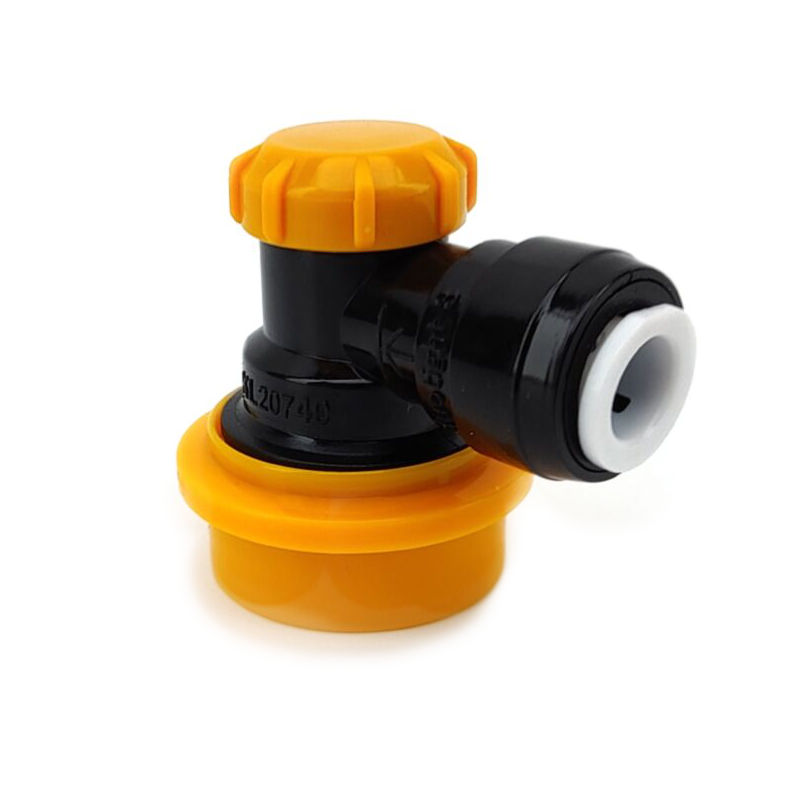
Tubing connections include barbed stems for hose clamps and threaded MFL ¼ fittings with swivel flare nuts. Threaded ports easily accommodate Duotight push-in adapters for 8 mm or 9.5 mm outer-diameter draft tubing.
Materials range from cheaper plastic components, such as the Ball Lock connector (liquid) MFL¼ or the Ball Lock connector (gas) barbed, to long-lasting stainless steel options like the Ball Lock connector (liquid) MFL¼ stainless steel.
Safe Connection Procedures
Working with pressurized vessels demands caution. Before connecting draft hardware to an unfamiliar or pre-owned keg, always vent internal pressure completely using the pressure relief valve (PRV). Never loosen fittings on a pressurized tank.
Gas regulators must be protected from backflow. Installing a check valve along the gas line stops beer from flowing into the regulator internals during pressure drops.
Assembly of the gas management setup is covered in our dedicated guide: «Home Kegging: Complete Guide to Building Your First System».
Hygiene and Maintenance: Cleaning Lines and Caring for Seals
Routine sanitation eliminates off-flavors in finished pours. Draft lines should be flushed every two to three weeks or whenever an empty keg is swapped. Disconnects and couplers require full servicing on the same schedule.
Recommended cleaning routine:
- Disassembly: take apart the coupler body or unscrew the Ball Lock components.
- Washing: clean all internal parts in warm water with an alkaline beverage-line wash to dissolve organic residue.
- Sanitizing: submerge components in a certified sanitizing solution.
- Rinsing and drying: rinse thoroughly with clean cold water and let dry completely.
Keep rubber O-rings supple by coating them with food-grade lubricant (Keg lube). This prolongs seal life without harming head retention. When buying used vessels, inspect the neck and latch hardware for physical dents, which prevent a tight gas seal.
Frequently Asked Questions
How can I identify the exact coupler needed for my keg?
Always inspect the geometry of the top neck fitting. Flat circular flanges take type A, three-flat designs use type G, and S (Europe) and D (US) look alike, so fit the coupler without force: a tight fit means a different type.
Can I attach a Ball Lock disconnect to a Pin Lock keg?
No, the two quick-disconnect standards are physically incompatible. Ball Lock utilizes ball bearings, while Pin Lock uses locking pins arranged along the post.
What should I do if a keg coupler does not engage or slides on with extreme resistance?
Do not force the connection. Heavy mechanical resistance indicates an incompatible coupler type, such as attempting to slide a type A coupler onto a type M neck.
How do I identify the gas post on a Cornelius keg if the markings have worn off?
Examine the hex nut at the base of the post: the gas intake post almost always has fine machined lines or notches cut into its corners, whereas the liquid post has smooth surfaces.