

Common Problems in Dark Beers: Astringency, Low Mash pH, and Ashy Off-Flavours
Working with heavily roasted grains requires a balanced brewing approach. Dark grains with intense colour profiles fundamentally alter the chemistry of the mash compared to pale base malts.
- Mash acidification: heavily roasted malts naturally lower the mash pH due to their inherent acidity.
- Tannin extraction: harsh tannins from the grain husks leach into hot water over prolonged mashing times, turning a dark ale into an acrid, sharp, and astringent beverage.
- Over-caramelisation mistake: attempting to darken wort using only caramel or crystal malts leads to excessive unfermentable residual sweetness instead of a clean, balanced finish.
- Baseline proportion: a reliable and safe starting point for most roasted specialty malts is approximately 5% of the total grist.
Chocolate Malt: Velvety Notes of Cocoa and Nuts
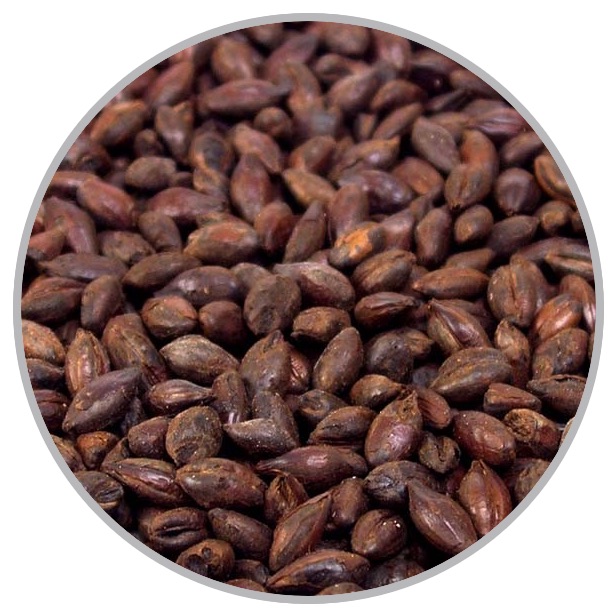
Chocolate malt typically features a colour rating around 350°L (with darker versions reaching up to 450°L). It introduces rounded notes of cocoa, dark chocolate, and toasted nuts without imparting harsh roasted dryness.
The standard grist proportion ranges from 3% to 12%. Lower additions suit brown ales and milds, while levels approaching 12% are well-suited for robust porters. To round out the mouthfeel and body, chocolate malt is frequently paired with caramel malts, such as CaraAroma or Special W brewing malts.
Roasted Barley: Classic Dryness and Coffee Character in Stouts
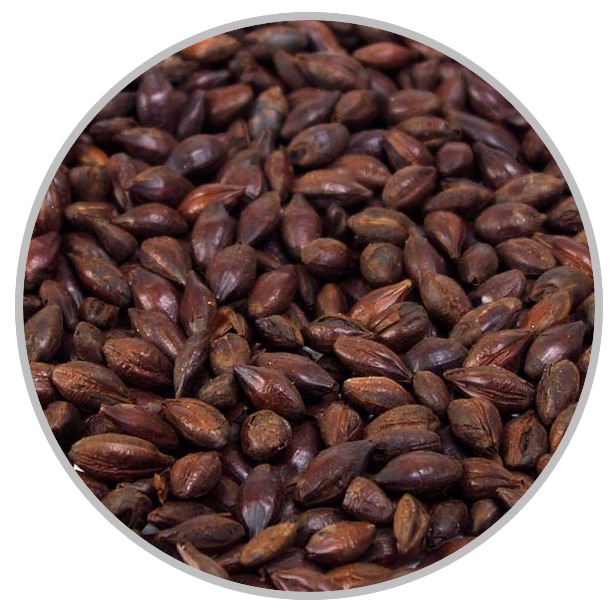
The defining feature of roasted barley is that it is produced from unmalted grain. As an unmalted adjunct, it possesses zero diastatic power, but delivers crisp roast dryness and pronounced coffee notes.
A benchmark example is Weyermann Roasted Barley. At a colour level of 1000–1300 EBC, it produces an assertive coffee roast and a distinct deep colour with ruby highlights. Recommended usage ranges between 2% and 10% of the grist: modest amounts introduce an aromatic espresso note, while higher percentages define traditional dry stouts.
Carafa Special: Rich Colour and Body Without Husk Bitterness
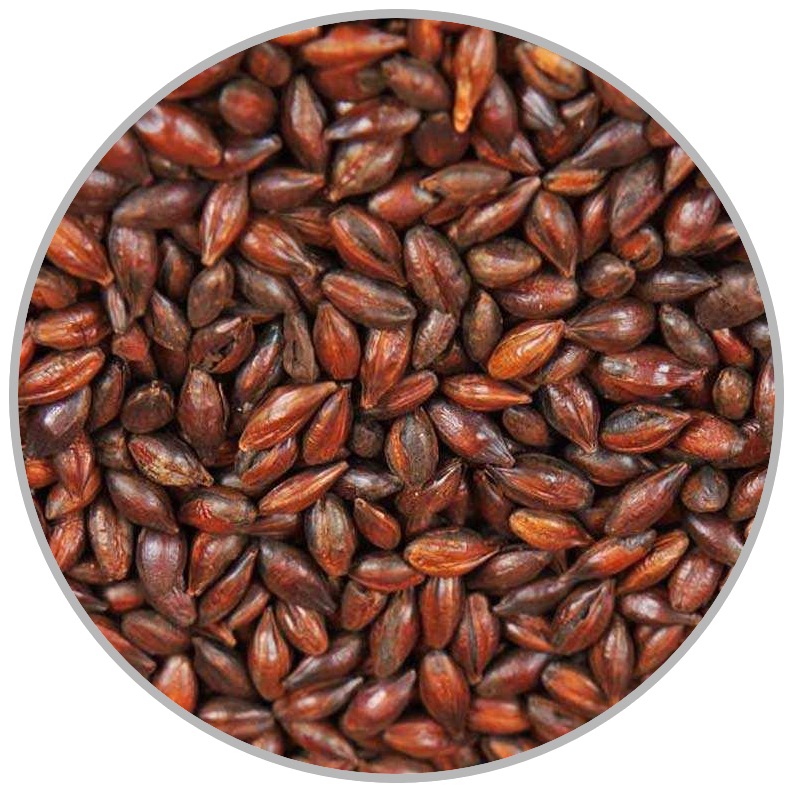
Weyermann produces Carafa Special from premium German spring barley. Its main technical advantage lies in dehusking: removing the outer hull prior to malting and roasting eliminates bitter tannins, preventing harsh ashy off-flavours.
| Malt Variety | Colour (EBC) | Typical Styles | Grist Share |
|---|---|---|---|
| Carafa Special Type 1 | 800–1000 | Schwarzbier, Black IPA, porter | 1–5% (adjustment) / up to 10% |
| Carafa Special Type 2 | 1100–1200 | Dunkel, schwarzbier, strong ale | up to 5% |
| Carafa Special Type 3 | 1300–1500 | Stout, porter, dark lager | up to 5% |
Weyermann Carafa Special Type 1 offers smooth espresso notes and is particularly valuable for Black IPAs and schwarzbiers, where clean hop character must not be overshadowed by acrid roast. Types 2 and 3 function as debittered black malts, enhancing fullness and body.
Addition Techniques: Achieving Colour Without Tannin Extraction
Because roasted specialty grains contain no ungelatinised starches requiring enzymatic conversion, full-duration mashing is not strictly required. Several methods help extract colour while leaving harsh tannins behind:
- Vorlauf capping: milled roasted grains are placed on top of the grain bed during mash recirculation. The wort picks up deep colour without prolonged husk contact.
- Cold steeping: grains soak in ambient water for 24 hours. The resulting dark liquid is strained and added directly to the kettle before boiling, completely bypassing mash pH drops and tannin extraction.
- Hot steeping: grains steep separately in water heated to 77°C for 10 minutes prior to blending into the boil kettle.
Frequently Asked Questions
What is the difference between standard Carafa and Carafa Special?
Standard Carafa is roasted with its husk intact, giving more traditional roasty bitterness. Carafa Special is dehusked before malting and roasting, allowing brewers to achieve dark colour and smooth coffee-chocolate flavours without husk astringency.
Is it necessary to mash roasted barley alongside the base malt?
No, full-length mashing is not required. Because roasted barley is unmalted and contains no convertible starch, it can simply be added at vorlauf during sparging or steeped separately in hot or cold water.
How do dark malts affect mash pH and how can an excessive drop be avoided?
Roasted malts possess natural acidity that depresses mash pH.
How much dark malt is needed to get colour without acrid bitterness?
For subtle colour adjustment, 1% to 5% of a dehusked malt like Carafa Special Type 1 is sufficient. Approximately 5% is the standard baseline for roasted malts, and steeping techniques ensure bitter astringency remains absent.